
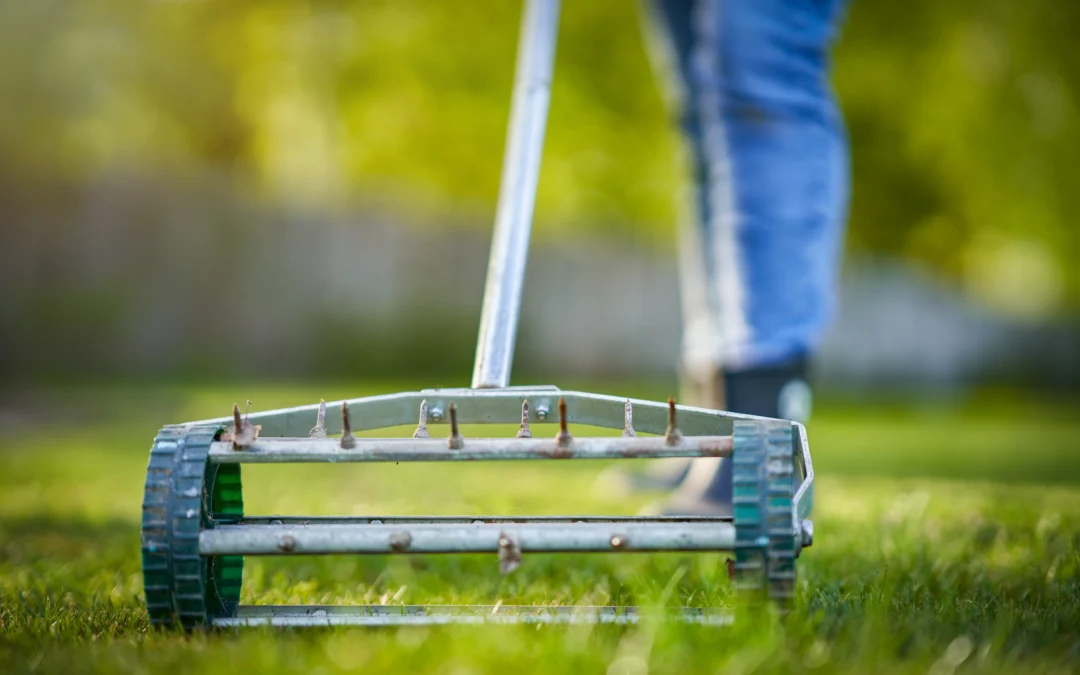
It may sound strange to aerate and overseed your lawn so close to winter. The goal isn’t to keep your lawn growing throughout the winter. Instead, aeration and overseeding in the fall give your lawn a chance to germinate and establish before winter dormancy. And, once spring arrives, those established plants can resume growth and give your lawn the lush appearance you wish for.
Read on as we share the ‘what, why, and how’ of fall aeration and overseeding for your lawn.
What is Aeration?
Think of lawn aeration as giving your lawn some air to breathe. When soil gets packed down from everyday use, such as foot traffic and mowing, air, water, and nutrients may have a harder time reaching the soil. Hence, creating small holes in the soil, or aerating your soil, opens the soil up and makes the three crucial elements reach the roots more easily.
Why Is Fall a Good Time to Aerate Your Lawn?
Timing is everything, and there’s no better time than fall to aerate your lawn because cooler temperatures give the best chance for your lawn to recover and let the roots grow. Besides, the fall aeration you do will give your lawn a better foundation for winter. Finally, once spring returns, you can enjoy the healthy growth you’ve always longed for.
When Should You Aerate Your Lawn in the Fall?
The rule is not to wait until the first frost is right around the corner. Typically, the best time to tackle fall aeration in Pittsburgh is in early to mid-fall or, in other words, late August through September. This gives your grass enough time to recover and keep growing before dormancy.
How Can You Tell if Your Lawn Needs Aeration?
The easiest signs your lawn needs aeration include water pooling on the surface, hard soil, or grass that looks thin or patchy. Or try pushing a screwdriver or garden fork into moist soil and see whether it takes a lot of effort to push it several inches. Besides these signs, if your lawn gets heavy traffic from outdoor activities, think about doing it anyway.
Does Every Lawn Need to Be Aerated Every Fall?
Not always, especially if your lawn has healthy, loose soil, doesn’t become hard and compacted, and doesn’t get much foot traffic. On the contrary, lawns with heavy clay soil that face frequent foot traffic may need regular fall aeration. Hence, take a look at your lawn and see whether yours may benefit from it.
How to Aerate Your Lawn in the Fall
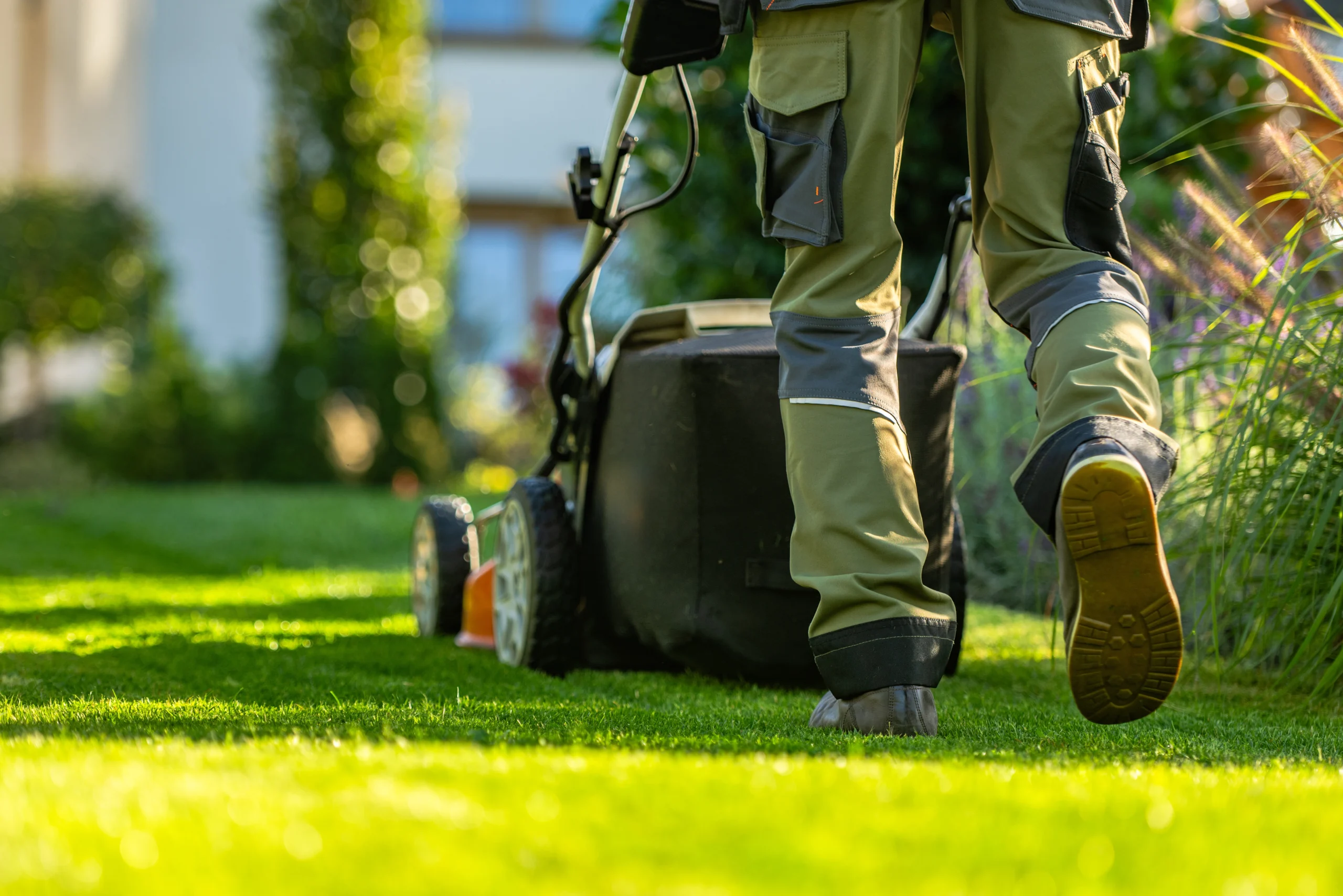
Step 1: Mow the Lawn
Before doing fall aeration, give your lawn a good mow. The way to do it is by cutting it to its normal height or slightly shorter to give the aerator easier access when perforating your soil. While you’re at it, clear away any leaves, sticks, or debris you meet along the way to make it easier for the aerator to move across your yard.
Step 2: Make Sure the Soil Is Moist
Your soil should be moist before you aerate, but not soaking wet. If the ground is dry and hard, water it a day or two before you begin your fall aeration, or give it time to dry out if it’s muddy or waterlogged. To keep it simple, your soil should be soft enough to work with, but not so wet that it sticks to your shoes or equipment.
Step 3: Mark Obstacles
After you’re done with conditioning, map out your lawn for any obstacles that could get in the way, from sprinkler heads and shallow cables to irrigation lines, tree roots, or anything else below the surface. That way, you can prevent unnecessary damage to your aerator and work more safely.
Step 4: Aerate the Lawn
Now time to aerate! Run the aerator over your lawn and make sure to cover the entire area. For heavily compacted sections, make a second pass in a different direction to make more openings. As for other non-heavily compacted sections, avoid going over the same spot more than necessary.
Step 5: Leave the Soil Plugs
Don’t worry about the small plugs the aerator created from the ground; just leave them there and let nature do the rest. As they eventually dry out and break down on their own, they’ll return the nutrients and organic matter to your lawn while helping the soil settle back into place–giving your grass a healthier environment to grow.
What Is Overseeding?
Overseeding is the technical term for simply spreading new grass seed over an existing lawn. The idea is to fill in thin or bare spots and make your lawn fuller. This practice is also ideal for lawns that naturally thin from foot traffic and summer heat. And when done in the fall, cooler temperatures create favorable growing conditions for the seed to establish before winter.
How to Overseed Your Lawn After Aeration
Step 1: Choose the Right Grass Seed
It all begins by choosing a variety that works well according to the local conditions. Consider how much sunlight your yard gets and how much foot traffic it usually sees. Many Pittsburgh homeowners choose Kentucky bluegrass or perennial ryegrass. But if you’re not sure which is right for your yard, check the seed label or ask a lawn-care professional for guidance.
Step 2: Spread the Seed Evenly
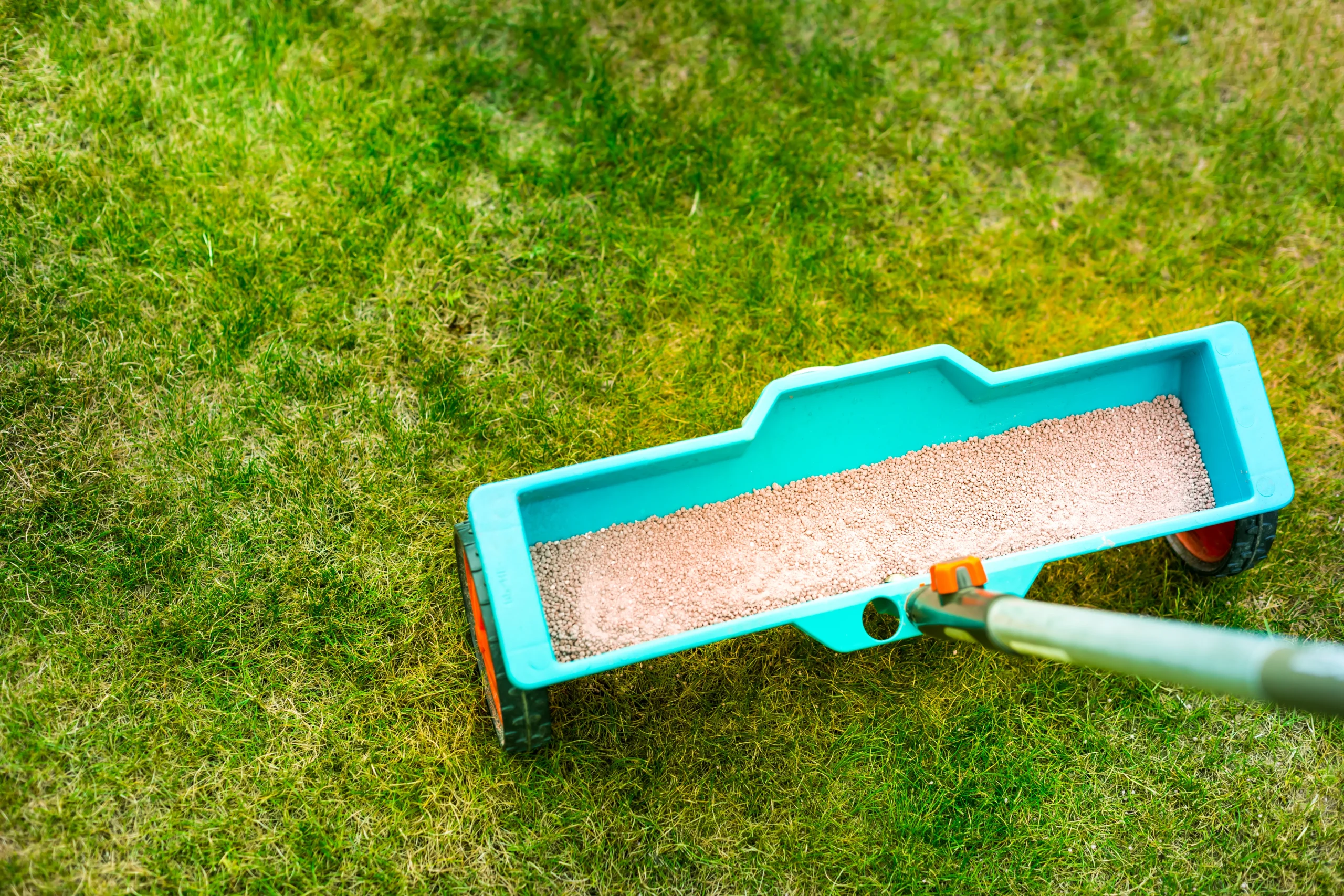
After choosing the right seed, try not to pile too much seed in one spot. Instead, spread it evenly across your lawn using a broadcast or drop spreader. Follow the recommended seeding rate on the package, and take extra care around thin or bare areas. An even spread gives each seed enough room to grow and helps your lawn fill in more consistently.
Step 3: Improve Seed-to-Soil Contact
Thanks to your fall aeration, you already have small openings in the soil that give your seeds a better place to settle. What you can do to help the seeds make good contact with the soil is gently raking the area. Just remember that seeds generally need to stay relatively close to the surface, so raking too aggressively will do more harm than good.
Step 4: Apply Starter Fertilizer if Appropriate
For an extra boost, consider giving your lawn fertilizer after overseeding. Take time to read the label to check whether it’s compatible with your seed. Also, don’t skip the recommended rate written on the package to avoid overdoing it, because ‘the more fertilizer, the better’ isn’t always the case.
Step 5: Begin Watering
At last, time for watering. Right after the fall aeration and overseeding process is done, water lightly while you wait for the new grass to germinate. Once the new grass starts to establish, you can gradually water less often but more deeply. Put simply, keep the seeds moist without turning your lawn into a puddle.
What Tools and Supplies Do You Need for Fall Aeration and Overseeding?
You don’t need a lot of equipment to get started with your fall aeration and overseeding, but you do need the right ones. Below, we categorized them to help you sort through the whole process:
- Lawn Preparation
- Lawn mower
- Leaf rake
- Garden hose or sprinkler
- Marking flags or stakes
- Aeration
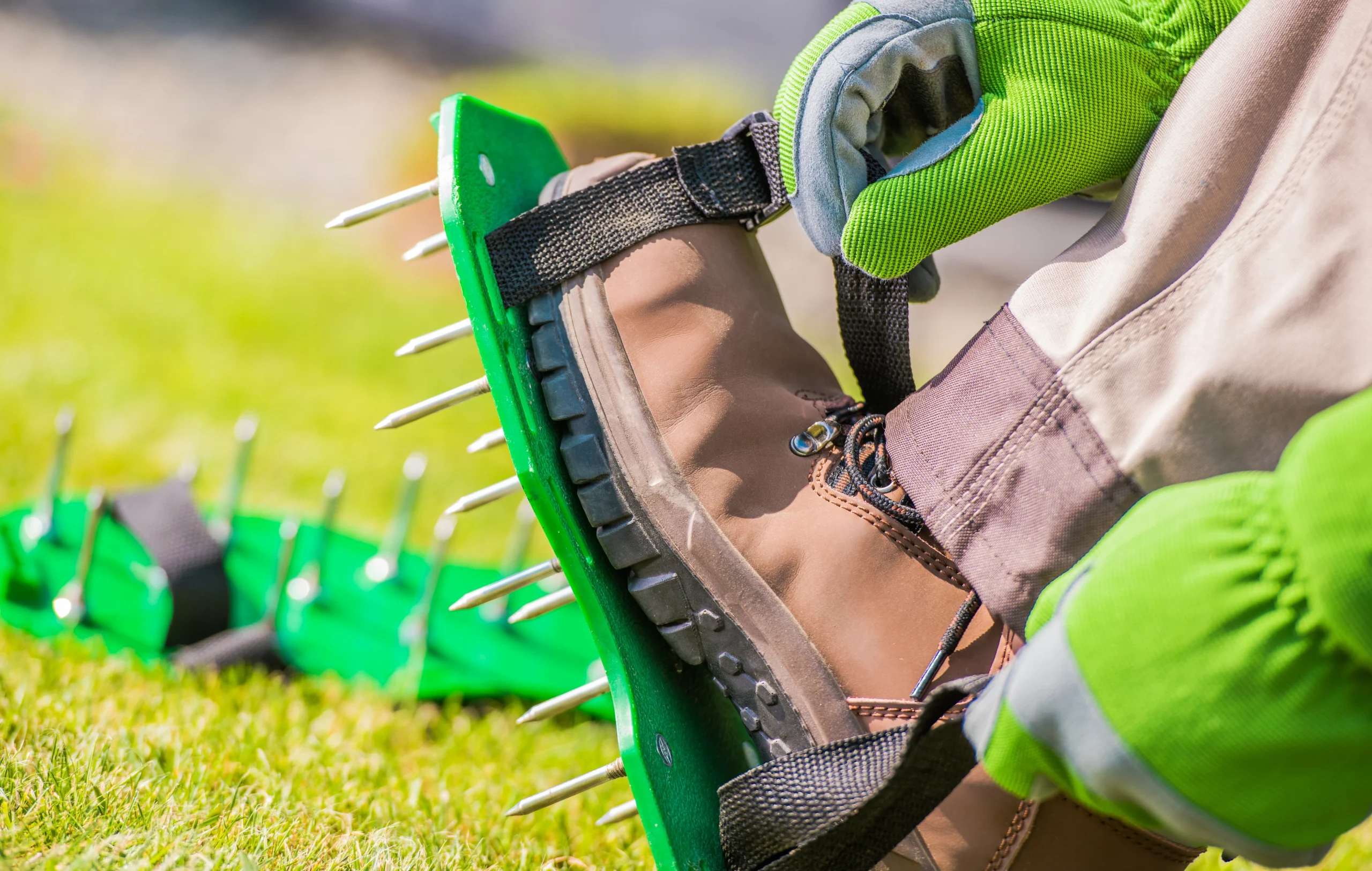
- Core aerator
- Manual aerator or garden fork
- Work gloves
- Overseeding
- Grass seed
- Broadcast or drop spreader
- Leaf or garden rake
- Starter fertilizer
- Watering and Aftercare
- Sprinkler or hose with a gentle spray setting
- Lawn fertilizer
- Grass seed
Frequently Asked Questions About Fall Aeration and Overseeding
Is fall a good time to aerate your lawn?
Definitely! Fall is a great time, especially if you’re working with cool-season grass. With the summer heat starting to fade, cooler temperatures give your grass a chance to recover and grow without dealing with as much stress.
Should I aerate before overseeding?
Generally, yes. Aerating before overseeding creates openings in the soil that can improve seed-to-soil contact and support germination.
Can I overseed without aerating?
Yes, but aeration can be especially beneficial when the soil is compacted or when you need improved seed-to-soil contact.
Should I fertilize after aerating and overseeding?
You can, but it really depends on what your lawn needs. So, before applying anything, check your lawn conditions, choose the right one based on the condition, and follow the instructions.
How long after aeration should I overseed?
Overseeding soon after aeration allows the grass seed to take advantage of the openings and exposed soil created during aeration.
Is September too late to overseed in Pittsburgh?
Not necessarily. September can still be a good time to overseed, especially in the earlier dates of the month. The later you wait, the less time your new grass has to get established before winter arrives.
Get All Of Your Lawn Care Needs at Johnson’s Ace
From preparing the soil and choosing the right grass seed to watering and caring for new growth, having the right tools and supplies on hand can help you get through the entire process without having to pause halfway.
Ready to get started? Go to Johnson’s Ace Hardware for all the fall lawn project supplies you need.
Recent Comments